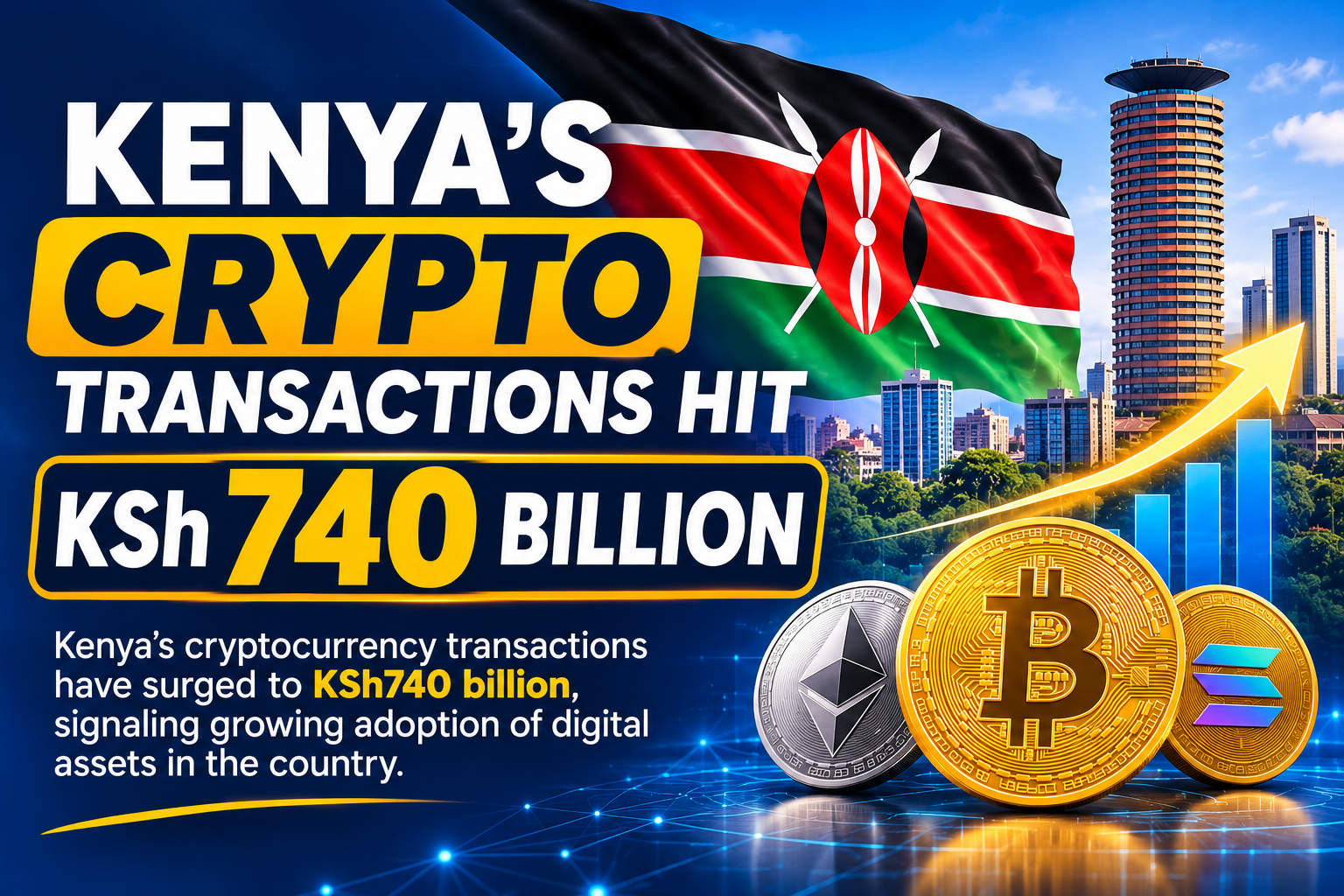
KENYA'S CRYPTO TRANSACTIONS HIT KSh740 BILLION
WHY MORE BUSINESSES ARE TURNING TO DIGITAL ASSET
Kenya’s cryptocurrency market is growing, but the interesting part is not just how much money is moving through it. It is what people are using crypto for.
A report published by Business Daily Africa on November 3, 2026, revealed that cryptocurrency transactions in Kenya reached KSh740 billion (approximately $5.7 billion) in the year to June 2026. That is a 38% increase from the previous year’s KSh505 billion.
For a market that has spent years dealing with questions about regulation, trust and the practical use of digital currencies, the figures are worth paying attention to.
And Kenya is not the only East African country in the picture. Uganda recorded approximately $780 million in cryptocurrency activity during the same reporting period, while Rwanda recorded about $441 million.
So what is happening in the region?
BUSINESSES ARE FINDING PARACTICLES USES FOR CRYPTO
One reason behind Kenya’s growing activity is the demand for easier ways to handle international transactions.
Businesses that import goods often have to deal with foreign suppliers, currency conversion and the cost of sending money across borders. These challenges can affect the time it takes to complete a transaction and the final cost of doing business.
Digital assets, particularly stablecoins, are becoming part of this conversation.
Some businesses are exploring dollar-linked digital currencies such as USDT for international transactions. Others are using them to manage funds received from overseas customers or business partners.
The attraction is understandable. A digital dollar can be transferred between compatible wallets without following the same process as a traditional international bank transfer.
However, the actual cost and speed depend on the network, service provider, conversion arrangements and applicable regulations. It is not automatically cheaper in every situation.
BITCOIN IS NOT LEADING KENYA’S CRYPTO ACTIVITY
Perhaps one of the most interesting details in the report is the difference between Kenya and other African markets.
Bitcoin accounts for only about 2% of Kenya’s recorded cryptocurrency activity, compared with 92% in Nigeria, according to the figures reported by Business Daily Africa.
This is a significant difference.
It suggests that Kenya’s crypto market has developed around different needs. Rather than being driven mainly by Bitcoin trading, stablecoins and their potential use in payments, international trade and holding dollar-linked value have become particularly important.
For businesses, this is an important distinction. The conversation is moving beyond whether Bitcoin will rise or fall and towards how digital assets can fit into existing financial activities.
WHAT DOES THIS MEAN FOR UGANDA?
Uganda recorded approximately $780 million in cryptocurrency activity in the year to June 2026.
Although this is considerably below Kenya’s figure, it shows that Uganda is part of the wider regional market.
There are similarities between the two economies. Both have businesses involved in international trade, people receiving money from abroad and individuals who regularly need to deal with foreign currencies.
The difference is that Kenya has moved further in establishing a formal regulatory framework for virtual asset service providers.
Uganda’s position remains different. The regulatory restrictions surrounding cryptocurrency use as a payment instrument are important, and businesses should not assume that developments in Kenya automatically apply here.
For Ugandan businesses and crypto users, the opportunity is to understand how the market is changing while remaining careful about the rules that apply locally.
REGULATION IS BECOMING PART OF THE BUSINESS CONVERSATION
Kenya’s growth is also happening alongside changes in its regulatory environment.
The country’s Virtual Asset Service Providers framework introduced licensing and supervision requirements for businesses operating in the sector, with implementing regulations coming into force in July 2026.
This matters because trust is important in financial services.
Businesses handling significant transactions need to know who they are dealing with, how funds are handled, what records are maintained and what happens when something goes wrong.
The growth of digital assets alone cannot solve these problems. Stronger oversight and responsible service providers will remain important as the industry develops.
THE BIGGER PICTURE FOR EAST AFRICA
Kenya’s KSh740 billion figure is worth watching, particularly because it gives a clearer picture of how cryptocurrency is being used beyond investment and speculation.
Uganda and other East African markets have their own opportunities and challenges, but developments in neighbouring countries can offer useful lessons.
For now, one thing is clear: the conversation around cryptocurrency in Africa is becoming more practical. Businesses are paying attention to transaction costs, international payments, access to digital dollars and the reliability of the services they use.
The next stage of growth may depend less on how many people are buying Bitcoin and more on whether digital assets can solve real financial problems.
For East Africa, that is a trend worth following.
Still have questions?
Message us on WhatsApp — we reply instantly and can walk you through your exchange step by step.
Chat on WhatsApp