Africa's 41 Currencies Could Be Going On-Chain
 What Paystack’s New Initiative Means for Cross-Border Payments
Africa’s cross-border payment problem has never simply been about the availability of money. It has also been about how difficult, expensive and fragmented it can be to move that money between countries.
A business importing goods from Kenya, a Ugandan company paying a supplier in Ghana, or a freelancer receiving income from another African market may encounter different banking systems, currencies, conversion requirements and settlement procedures.
Now, a new development involving Paystack and blockchain infrastructure is bringing fresh attention to a question that has long challenged African financial markets: What would happen if the continent’s fragmented payment systems could communicate more efficiently?
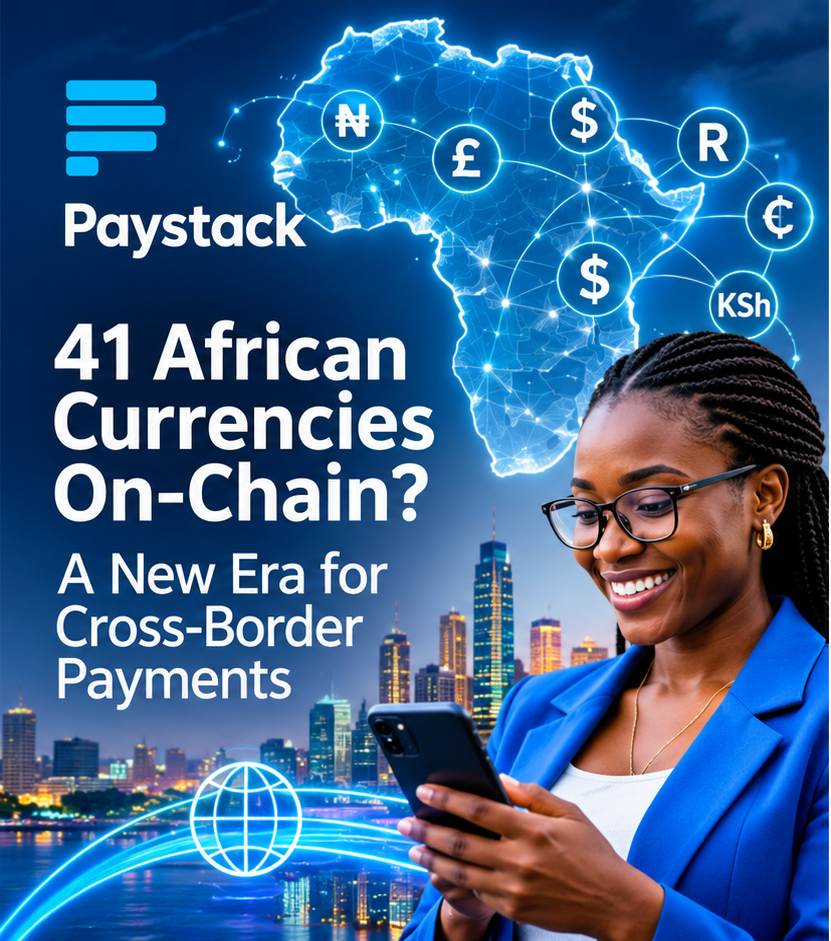
At Solana Breakpoint 2026 in London, Paystack CEO Shola Akinlade presented the vision of bringing Africa’s 41 currencies on-chain. The presentation highlighted Global Stack, an initiative designed to connect familiar payment channels such as bank transfers, mobile money and cards with blockchain-based financial infrastructure.
The development is significant because it points towards a different way of thinking about international payments. Instead of treating blockchain as a separate financial activity, the technology could become part of the infrastructure supporting everyday money movement.
What Is Global Stack and Why Is It Attracting Attention?
Global Stack is designed to help fintech companies, neobanks and payroll platforms collect, hold, convert and pay out money across African markets.
Its model connects local payment systems with stablecoin settlement infrastructure. A transaction can begin through a familiar bank or mobile money channel, move through stablecoin infrastructure and eventually be converted into the recipient’s local currency.
This is particularly relevant in Africa, where mobile money has become an important part of everyday financial activity but cross-border payments remain complicated.
According to Global Stack’s published platform information, its payout network covers 20 African markets, including Uganda, Kenya, Tanzania, Rwanda, Ghana, Nigeria and South Africa.
The distinction is important: the 41-currency figure represents the wider ambition, while the currently published payout network is narrower.
The initiative also illustrates how financial technology companies are exploring ways to connect conventional payment infrastructure with blockchain networks without requiring every customer to become a cryptocurrency user.
Why African Businesses Should Pay Attention
For businesses operating across African borders, payment efficiency is directly connected to operating costs.
An importer who needs to pay suppliers in another country must consider exchange rates, transfer fees, settlement times and the availability of foreign currency.
These challenges can affect purchasing decisions, delivery schedules and the amount of working capital a business needs to maintain.
A more connected payment infrastructure could help address some of these difficulties by reducing the number of separate systems involved in moving money.
Consider a Ugandan business purchasing goods from a supplier in another African country. Under a conventional arrangement, the business may need to navigate several banking and currency conversion processes.
Infrastructure that connects local payment channels with stablecoin settlement could potentially create another route for handling such transactions.
However, the actual benefits will depend on the markets supported, the currencies involved, liquidity, regulatory permissions and the fees charged by participating providers.
It is also important to recognise that blockchain settlement does not automatically eliminate foreign exchange costs or guarantee cheaper transfers.
Blockchain Is Moving Beyond Cryptocurrency Trading
One of the most important developments in digital finance is the growing interest in using blockchain infrastructure for activities beyond buying and selling cryptocurrencies.
Payment settlement, international transfers, treasury management and financial infrastructure are becoming increasingly important areas of experimentation.
The OECD’s Africa Capital Markets Report 2026 highlights the growing adoption of crypto-assets and stablecoins across the continent. It reports that the total value of crypto-assets transacted in Sub-Saharan Africa increased by 52% year-on-year in 2025.
However, the report also makes an important distinction: much of the activity remains driven by trading, while the use of stablecoins for real-world payments is still developing.
This means that the next phase of growth may not simply be about attracting more cryptocurrency traders. It may also involve building systems that connect digital assets with actual economic activity.
What Businesses Should Consider Before Using Blockchain-Based Payments
As new payment infrastructure develops, businesses should avoid choosing a payment route simply because it involves blockchain technology.
Several factors deserve attention:
- 1. Currency conversion costs: Businesses should understand the exchange rate being applied and all associated fees.
- 2. Settlement arrangements: It is important to establish when funds will become available to the recipient.
- 3. Liquidity: A payment system must have sufficient liquidity to convert digital assets into the required local currency.
- 4. Regulatory compliance: Companies should work with providers operating within applicable legal and regulatory requirements.
- 5. Transaction security: Businesses should verify wallet addresses, counterparties, transaction networks and payment instructions before transferring funds.
These considerations remain important regardless of whether a transaction is processed through conventional banking infrastructure or blockchain-based settlement.
The Bigger Picture for Africa’s Financial Future
Africa’s financial markets do not necessarily need to abandon traditional banking to benefit from blockchain technology.
The more realistic opportunity may lie in connecting existing systems with newer infrastructure.
Mobile money has already demonstrated that financial services can become more accessible when they are designed around how people actually transact. Blockchain-based settlement could become another layer in that development if it delivers reliable, affordable and compliant services.
Global Stack’s ambitions bring this possibility into sharper focus.
For Uganda and the wider African market, the real test will not be how many currencies can theoretically be connected to a blockchain. It will be whether businesses and individuals can move money across borders more efficiently, access fair conversion rates and receive funds through channels they can actually use.
As these developments progress, the relationship between currency exchange, cryptocurrency and international payments is likely to become increasingly important.
At BuyCrypto Africa, we recognise the growing importance of accessible digital asset and currency exchange services in an increasingly connected financial market. Businesses and individuals seeking cryptocurrency exchange or currency conversion services can contact our team to discuss their requirements and available options.
Disclaimer: This article is intended for general informational and educational purposes only. It does not constitute financial, investment or legal advice. Cryptocurrency and stablecoin transactions carry risks, including price, liquidity, cybersecurity and regulatory risks. Readers should independently verify service availability, fees and applicable legal requirements before undertaking any transaction.
Still have questions?
Message us on WhatsApp — we reply instantly and can walk you through your exchange step by step.
Chat on WhatsApp