BINANCE HIT BY A $6.3 Billion CRYPTO HEIST
A MAJOR SECURITY INCIDENT RAISES FRESH QUESTIONS ABOUT CRYPTO CURRENCY EXCHANGE SAFETY
The cryptocurrency industry is facing another major security challenge following reports that hackers stole approximately $6.3 billion in digital assets from wallets used by Binance, the world’s largest cryptocurrency exchange.
The incident, reported on 30 October 2026, is already attracting attention across the global crypto market because of the amount involved and the reported speed at which the funds were moved.
According to Reuters, the majority of the theft unfolded within approximately 20 minutes on Thursday, 29 October.
The incident has raised important questions about the security of cryptocurrency exchanges and the risks associated with keeping digital assets on centralised trading platforms.
For millions of people who use exchanges to buy, sell, hold or transfer cryptocurrency, this is a reminder that understanding how a platform protects customer assets is just as important as understanding how to trade.
WHAT HAPPENED AT BINANCE?
Initial reports suggested that the attack may have involved a compromised laptop belonging to an engineer.
However, Binance later indicated that its investigation had uncovered additional points of breach.
Blockchain security firm TRM Labs reported that attackers compromised part of Binance’s transaction-signing infrastructure.
This is an important distinction.
A cryptocurrency exchange does not simply store money in an ordinary online account. It uses systems that help authorise transactions and control the movement of digital assets between wallets.
If attackers gain access to systems responsible for approving transactions, they may be able to initiate transfers that should not have been authorised.
Reuters reported that approximately $6.3 billion in cryptocurrency was drained from wallets Binance uses to process transactions.
The exchange said its investigation was ongoing and that it would cover the losses using its Secure Asset Fund for Users (SAFU) and company resources.
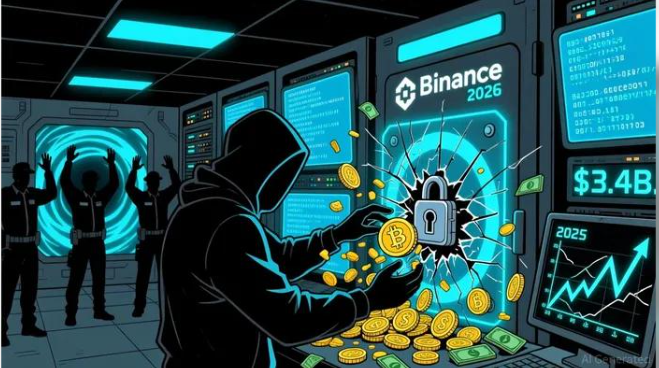
HOW DID THE HACKERS MANAGE TO MOVE SUCH A LARGE AMOUNT?
One of the most concerning aspects of the incident is how quickly the attackers reportedly moved the funds.
According to blockchain analysis cited by Reuters, the bulk of the theft took place in approximately 20 minutes.
The attackers reportedly gained access to transaction-authorisation infrastructure, allowing them to issue instructions that emptied affected wallets.
This shows why cryptocurrency security involves much more than protecting passwords.
An exchange may have security procedures, identity verification systems and multiple layers of protection, but vulnerabilities within its internal infrastructure can still create serious risks.
The incident also demonstrates the importance of monitoring transactions and responding quickly when suspicious activity is detected.
HAVE THE STOLEN FUNDS BEEN RECOVERD?
The recovery process is complicated because cryptocurrency transactions are generally recorded on public blockchains and cannot simply be reversed by the sender.
However, some digital assets have additional features that can help in certain situations.
Reuters reported that approximately half of the stolen assets were stablecoins, which were subsequently frozen by issuers including Tether, Circle, Ripple and World Liberty Financial.
This is possible because certain stablecoin issuers retain the technical ability to freeze specific tokens or wallet balances.
It is important to understand that freezing assets does not automatically mean the money has been returned to the rightful owner.
The process of tracing, investigating and recovering stolen cryptocurrency can involve several parties, including blockchain analytics companies, exchanges, issuers and law enforcement agencies.
Bitcoin and Ether present a different challenge because there is no central issuer with the ability to freeze individual coins.
Reuters also reported that some of the stolen assets had been used as collateral to borrow Ether.
WHAT DOES BINANCE SAY ABOUT CUSTOMER FUNDS?
The incident has understandably raised concerns among people who use Binance to hold and trade digital assets.
Binance’s co-CEO Richard Teng said the company would cover the losses through its SAFU fund and company resources.
The SAFU fund is an emergency reserve established to provide additional protection for users in certain circumstances.
However, users should understand that an exchange’s protection arrangements do not eliminate every possible risk associated with keeping cryptocurrency on a centralised platform.
Customers should follow official Binance announcements for updates on the investigation, deposits, withdrawals and any changes to services.
It is also important to avoid relying on screenshots, forwarded messages or social media claims that have not been verified.
WHAT DOES THIS MEAN FOR CRYPTO CURRENCY USERS IN UGANDA ?
For Ugandans who use Binance and other cryptocurrency platforms, the incident is particularly relevant.
Many people use exchanges for different purposes, including:
- Buying and selling USDT.
- Participating in peer-to-peer transactions.
- Holding Bitcoin and other digital assets.
- Receiving cryptocurrency payments.
- Converting digital assets into local currency.
- Sending and receiving funds internationally.
Although the Binance incident does not mean every cryptocurrency platform is unsafe, it highlights the importance of understanding where digital assets are held and who controls access to them.
For example, there is a difference between keeping cryptocurrency in an exchange account and holding it in a self-custody wallet.
With an exchange account, the platform generally controls the underlying wallet infrastructure and manages transactions on behalf of customers.
With a self-custody wallet, the user controls the private keys and is responsible for securing them.
Neither option is completely risk-free. Exchange accounts introduce platform and counterparty risks, while self-custody requires users to protect their recovery phrases and private keys carefully.
Five lessons every crypto user should take from the incident
1. Do not keep all your cryptocurrency on one exchange
People who hold significant amounts of cryptocurrency should understand the risks of concentrating all their assets on a single platform.
Depending on individual circumstances, using a combination of reputable exchanges and properly secured self-custody wallets may reduce dependence on one service provider.
2. Protect your account with additional security measures
Enable two-factor authentication, use strong and unique passwords, and avoid sharing login information.
Users should also be cautious of fake support accounts and links that imitate official cryptocurrency platforms.
3. Understand the difference between exchanges and wallets
Buying cryptocurrency on an exchange does not necessarily mean you personally control the wallet holding those assets.
Learn the difference between custodial and non-custodial wallets before deciding where to keep your funds.
4. Verify every transaction
Always check wallet addresses, blockchain networks and transaction details before sending digital assets.
A mistake involving an incorrect network or wallet address can result in permanent loss of funds.
5. Do not panic because of breaking news
Major cryptocurrency incidents often attract misleading claims and fake recovery offers.
Avoid making rushed financial decisions based on unverified information.
If an exchange announces service restrictions or security checks, rely on its official communication channels rather than messages from strangers promising to resolve the problem.
DOES THIS MEAN CRYPTO CURRENCY IS NOLONGER SAFE?
Not necessarily.
The Binance incident highlights a major vulnerability in the way digital assets can be stored and managed by centralised platforms.
However, it is important to distinguish between the security of an individual exchange and the underlying blockchain technology.
A breach involving an exchange’s internal infrastructure does not automatically mean that Bitcoin, Ethereum or every other blockchain has been compromised.
Different systems have different security models, and each must be assessed independently.
At the same time, cryptocurrency exchanges must continue investing in stronger security infrastructure, transaction monitoring, independent audits and effective incident-response procedures.
Users also have a responsibility to understand the risks associated with the services they choose.
What should African crypto businesses learn from this?
The incident has implications beyond individual traders.
Businesses involved in cryptocurrency exchange, remittances, digital payments and international transfers depend heavily on customer confidence.
When a major exchange experiences a security incident, people naturally begin asking questions about the safety of their own funds.
For African crypto businesses, this creates an opportunity to demonstrate the importance of transparency, proper customer verification, secure transaction procedures and clear communication.
Customers should be able to understand how transactions are processed, what happens when a payment is delayed and which procedures are available when something goes wrong.
Trust is not built simply by offering attractive exchange rates. It also depends on how responsibly a business handles customer transactions.
Final thoughts
The reported $6.3 billion Binance incident is a serious development for the cryptocurrency industry.
It demonstrates that even major global exchanges can face significant security challenges and that the protection of digital assets requires constant attention.
For Ugandan and African cryptocurrency users, the lesson is straightforward: understand the platform you are using, protect your accounts, verify transactions and never assume that holding cryptocurrency on an exchange comes without risk.
Cryptocurrency continues to create opportunities for digital payments, investment and international financial access. But those opportunities must be approached with an understanding of the risks involved.
As the Binance investigation develops, the industry will be watching closely to see how the stolen assets are traced, how the exchange addresses the incident and what additional security measures may follow.
Source: Reuters, 30 October 2026; Binance statements and blockchain security analysis cited in the Reuters report.
Still have questions?
Message us on WhatsApp — we reply instantly and can walk you through your exchange step by step.
Chat on WhatsApp